
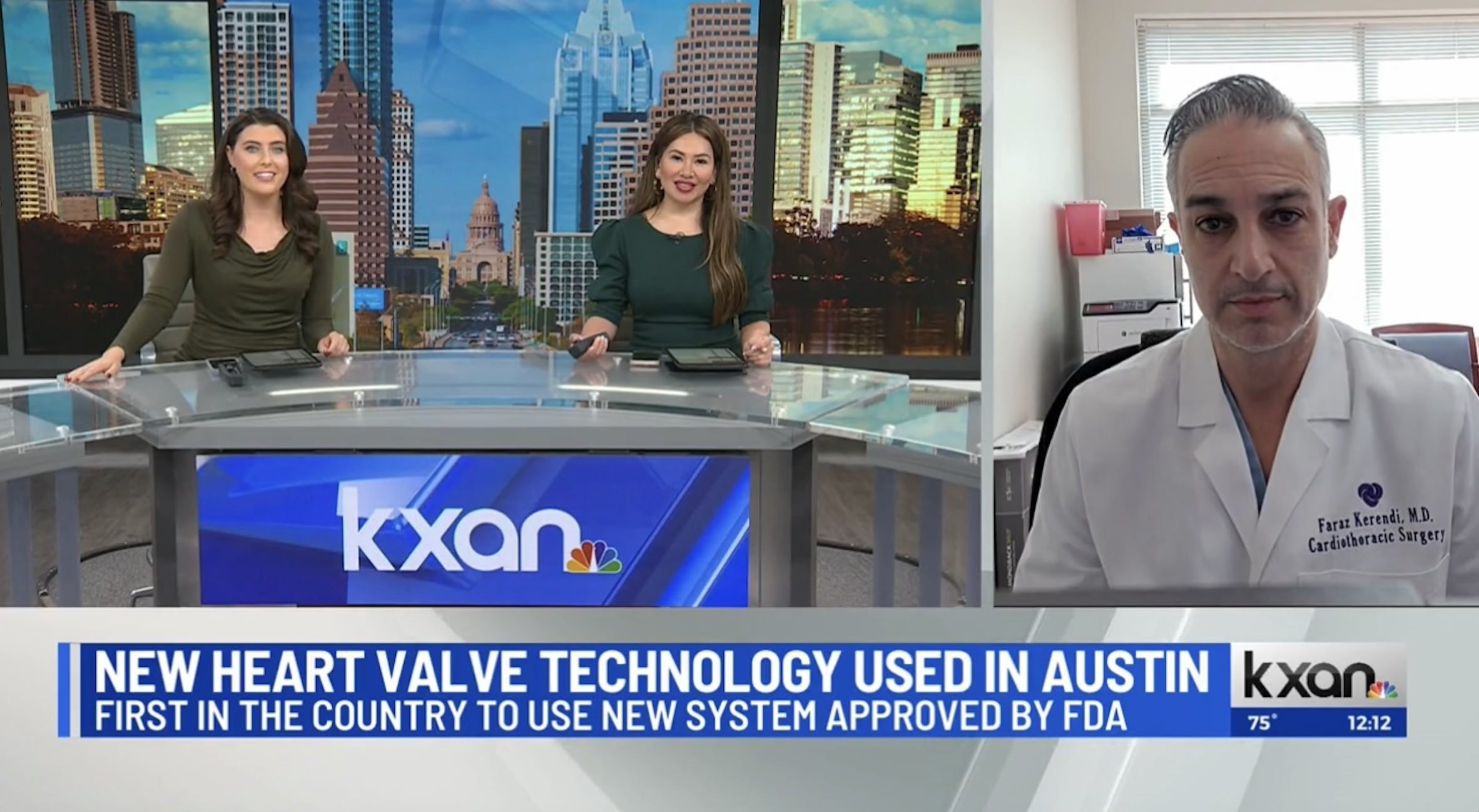
At Cardiothoracic and Vascular Surgeons (CTVS), innovation isn’t just part of what we do, it’s what defines us. This month, our very own Dr. Faraz Kerendi was featured on KXAN News for helping perform the first U.S. commercial implant of a new transcatheter valve replacement system designed to treat one of cardiology’s most complex conditions: severe mitral annular calcification (MAC).
Redefining What’s Possible for High-Risk Heart Patients
Mitral annular calcification is a buildup of calcium around the mitral valve, one of the heart’s four vital valves that keeps blood moving efficiently. When that valve stiffens or narrows, patients can experience extreme fatigue, shortness of breath, and ultimately, heart failure. Until now, these patients had few options. Traditional open-heart surgery – often the only route to replace a damaged valve – was simply too risky for elderly individuals or those with advanced heart disease.
“In the past, the only option was open-heart surgery to replace that valve, which for many patients is just too high-risk,” explains Dr. Kerendi. “This new technology allows us to treat people who otherwise wouldn’t have had any options at all.”
The Technology Behind the Breakthrough
Rather than stopping the heart and relying on a heart-lung machine, this next-generation transcatheter valve system uses a small incision and catheter-based approach to implant a new valve while the heart continues beating. Once placed, the device expands to restore normal blood flow, immediately relieving pressure and improving the heart’s ability to pump efficiently.
The procedure represents a paradigm shift in cardiac care, a safer, less invasive alternative for patients once deemed “inoperable.” The system went through three successful clinical trials at Heart Hospital of Austin under Dr. Kerendi and his team before earning FDA approval in early 2025.
Life Changing Results for Patients
The first patient to receive the new valve was facing end-stage heart failure and had been told there were no viable treatment options left. Without this procedure, Dr. Kerendi estimated they would have had no more than two years to live.
Now, with a fully functioning valve in place, their prognosis has drastically improved. The new device is expected to last at least 10 years, providing not just longevity, but renewed energy and quality of life.
“It’s really exciting that we can now address these issues in a way that’s safer, faster, and less traumatic for the body,” says Dr. Kerendi.
What This Means for Central Texas
For patients across Austin and Central Texas, the introduction of this procedure means hope where there once was none. It’s another example of how CTVS and our partners at the Heart Hospital of Austin are bringing cutting-edge cardiovascular treatments close to home, improving outcomes for patients with even the most complex cardiac conditions.
Learn More
If you or a loved one has been told you’re not a candidate for traditional valve surgery, you may still have options. For questions about our vascular and cardiac services, please visit ctvstexas.com or call us at (512) 459-8753 to schedule an appointment.
Don’t forget to follow us on Facebook and Instagram and check our blog for regular updates.